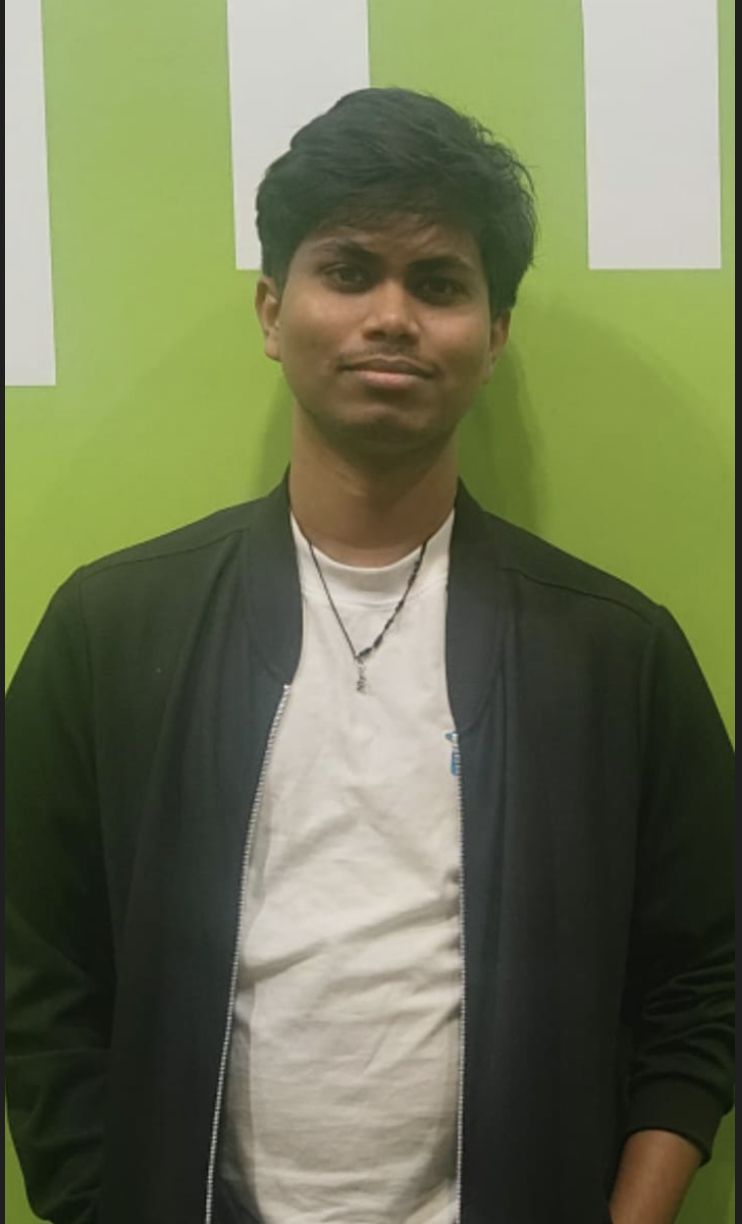
I’m Vasanth Adithya. Student at CBIT, Hyderabad. Ethical Hacker. Someone with a dangerously unhealthy obsession with understanding how things work at the lowest level — and an even unhealthier obsession with building things that probably shouldn’t exist yet.
There’s a concept I keep coming back to. If you’ve watched My Hero Academia, you know it: Plus Ultra. Go beyond your limits. Beyond what’s expected. Beyond what’s comfortable. Not because someone told you to — because your own standard demands it.
That phrase means more to me than most people would guess. Every project on this blog exists because at some point I hit a wall — hardware limits, complexity limits, “you’re just a student” limits — and decided to push through anyway. Not every attempt worked. Some blew up. Some took weeks to untangle. But every single one of them gave me that feeling: the one where you’ve gone past where you thought you could go.
This blog is where I document that. The raw engineering. The bad ideas that turned into good ones. The nights where things finally compiled at 3 AM and there was no one around to tell.
Let me show you the arc.
Year 1 — The First Push
I was a first-year student when local LLMs started getting real traction. Everyone was running them on powerful desktops, big GPUs, fast SSDs. I asked a different question: what’s the absolute minimum viable hardware you need? What if the hardware was just a USB stick?
USB-AI was the answer. A fully offline AI assistant that runs entirely from a USB drive — no internet, no cloud, no persistent install on the host machine. Plug in, run, unplug, leave no trace. Built around llama-cpp-python with use_mmap=True to stream model weights directly from USB without loading them into RAM upfront. Gemma-3-1B-IT was the only model small enough to actually work at the limit. Voice pipeline: Vosk STT → GemmaEngine → pyttsx3. Completely offline, start to finish.
A lot of people told me a USB drive was too slow for inference. They were right that it was slow. They were wrong that it was the point. The point was that it worked — and that no one had cared enough to try.
Year 2 — Getting Serious
Second year is when I stopped treating projects as assignments and started treating them as problems that deserved real solutions.
ClassPulse started as an IoT course project — a requirement, not a choice. But I refused to submit the obvious thing. Three-layer attendance verification: Flutter app polling WiFi SSID + GPS every 30 seconds, Flask backend on a Raspberry Pi, 45-minute presence threshold + 50m geofence. Optional OpenCV IP camera for headcount verification. No NFC cards, no QR codes, no manual sign-ins — just ambient signals from hardware students already carry. The assignment got submitted. The architecture got kept.
NACC was built for the Hugging Face + Gradio MCP Hackathon. The problem: multi-machine coordination is cognitively expensive and broken. My answer was a hub-and-spoke AI agent orchestrator — one Gradio UI, one natural language command, executing across Mac + Linux + Kali VM simultaneously via MCP server nodes. One command: “scan the Pi from Kali and summarize open ports on my MacBook” — it just runs. Five LLM backends supported. The hackathon deadline was real. The architecture was real. Both held.
Z-Umbra came out of the Avalanche Team 1 Hackathon in Hyderabad. The core idea isn’t WiFi sharing — it’s privacy as a commodity. The internet mines your data for free. Z-Umbra inverts that: you sell your bandwidth and anonymity on your own terms, earning AVAX for the risk you take by being an exit node. That risk — proof of risk — is what the UMBRA token represents. Not speculation. Not governance. The quantified economic value of privacy itself. UmbraProtocol.sol holds AVAX in escrow until the session is delivered, then settles in under a second on Fuji. The ghost network appears, routes traffic through your IP, and vanishes without a log. We won the Avalanche track.
Year 3 — Beyond the Ceiling
This is where things got strange — in the best way.
VoidDrop grew out of watching apps handle metadata the wrong way and getting genuinely angry about it. An ephemeral P2P file transfer app for Android: WebRTC DataChannels direct device-to-device, AES-256-GCM per-session, Supabase Realtime for signaling only. The server never touches file bytes. Not as a privacy promise — as a structural impossibility. The void never remembers because there’s nothing to remember.
DDC-CTF — I’m VP of DDC (Digital Defence Club) at CBIT. For CyberFest 2026, our national-level cybersecurity conclave, I built the entire CTF platform from scratch: backend, frontend, admin panel, live scoreboard, challenge files, auth flow. 121 challenges across 8 categories — including Master Web with dynamic decay scoring (500 → 50 pts as solves increase), APK reversing with compiled bytecode obfuscation, and AI challenges built around LLM prompt injection. 36-hour competition, 100+ teams, zero downtime, zero flag leaks. Then I stayed on-site and monitored it live for all 36 hours.
DITTOWARE started at midnight after I attended the Shield security event in January 2026. I left that event thinking about detection gaps — not as theory, but as something measurable. Late February I had a PoC combining 4 layered techniques: LSB bitmap steganography (entropy 0.29 — below every ML classifier’s threshold), direct syscalls bypassing ntdll hooks entirely, module stomping executing shellcode inside a signed Microsoft DLL’s .text section, and blind EDR unhooking. Submitted to VirusTotal: 9/72 detected. 63 vendors missed it. Microsoft Defender missed it. I wrote a formal disclosure to MSRC with a PoC zip. Microsoft updated their signatures. The case is filed. The gap is closed.
WebClaw was built last week. I spent days reading the OpenClaw and PicoClaw codebases line by line — fascinated by the CGEP Gene Evolution Protocol where an agent auto-saves successful behaviors as “genes” and injects them back into its own system prompt. I wanted to run it immediately. Then I looked at the hardware requirements: dedicated machine, background daemons, open ports, a Raspberry Pi.
I don’t have spare hardware. I have one laptop. I just built DITTOWARE to show exactly how badly an open local port can be exploited — I’m not leaving WebSocket servers running on my own machine permanently. So instead I asked: what runtime do I already have everywhere, sandboxed by default, that I can shut down without leaving a trace?
The browser. WebGPU for on-device vector compute. OPFS for sandboxed file storage. BroadcastChannel for zero-server inter-tab messaging. Chrome Native Messaging for controlled terminal access. No daemons. No install. No hardware.
The Other Fuel
I should tell you something else about me. Behind every debug session, every 3 AM compile, every wall I decided to push through — there’s a very specific kind of motivation running underneath it all.
I’m a die-hard anime fan. Always have been. And I mean that seriously, not as a personality quirk. The best anime I’ve watched aren’t just entertainment — they’re the most honest portrayals of what it actually feels like to keep going when the rational answer is to stop.
Naruto is the first one that got me. Not the fights. The will. A kid with nothing — no talent, no family, no acknowledgement — who decided that his dream was worth more than anyone’s opinion of him. He didn’t give up until he became Hokage. That’s not a metaphor I use loosely. “Never stop until your dream is standing in front of you” is something I genuinely run on.
One Piece taught me something different: you can’t do it alone, and trying to is the stupidest form of pride. Luffy is powerful, but Luffy without his crew is nothing. He goes all out, every time, without overthinking — and he does it surrounded by people who chose to sail with him. The nakama philosophy is real. Your people matter. Build with them, not past them.
Dragon Ball Z — this one needs no explanation if you know. Goku breaking through every ceiling, going Super Saiyan because the alternative was watching someone he loved fall. The idea that your limits aren’t fixed, that there’s always another level, that the struggle itself is what builds the power. I watch Goku push past 100% and I think about what I haven’t tried yet.
Attack on Titan hit differently as I got older. It’s not a comfort watch — it’s a hard watch. But the message underneath all the brutality is something I carry: the walls you think protect you are the walls that cage you. Eren’s obsession with freedom, Mikasa’s refusal to stand still while the world burns — AoT rewired how I think about constraints. Every “you can’t do that” is a wall. Most walls are built by fear, not physics.
Demon Slayer is about something more personal to me: consistency under suffering. Tanjiro doesn’t have a secret technique or broken power. He has work ethic so relentless it becomes a weapon. He improves every single day. He’s kind while being lethal. And no matter what he loses, he gets back up — because the people he loves deserve someone who gets back up.
These five are the ones that shaped how I think about building things. The characters didn’t have it figured out. They had direction, and they moved. That’s the template.
What to expect here
I don’t write think pieces. I don’t write “10 lessons from my journey.” I write about code — the actual code, the architecture decisions, the exact moment something breaks and what it takes to fix it.
Every post on this blog is a project that gave me that feeling. The one where you’ve gone past the limit you thought existed. Where the thing you built is genuinely more than what was expected from someone at your level — and you know it.
If you’re a student, a solo dev, a hacker, or just someone who thinks systems are more interesting when they’re pushed to their edges — you’re in the right place.
Plus Ultra.
— Vasanth